You might not know it, but you’ve got the military to thank for many of your favorite technological advancements. GPS, drones, microwave ovens, duct tape, and the internet are all technologies originally developed by the U.S. Army.
With this in mind, it makes sense to pay close attention to the Army’s latest innovations, because chances are they’ll be paving the way for future technological advances that the average household will use every day.
Alexander Kott, chief scientist at the U.S. Army Combat Capabilities Development Command’s Research Laboratory, recently revealed the lab’s top science and technology advancements of 2019.
Here’s a list of the 10 technologies Army scientists and engineers are developing to support the soldier of the future.
1. Coiled plastic muscles for stronger robots
Army robots of the future could be equipped with plastic artificial muscles, potentially creating the strongest robots in the world. Researchers have experimented with twisting and coiling plastic fibers into springs, allowing them to contract and expand much like real muscles. The optimal property values for the plastic to mimic muscle function were identified. In the future, these muscles could be used to augment human performance or be used for active prosthetic devices.
2. Self-healing materials
Like Wolverine from X-Men, we’d all love to possess the super-power of self-healing. Unfortunately, it’s unlikely to happen anytime soon, but the Army is working on a self-repairing synthetic material capable of regenerating itself when damaged. The cross-linking epoxy is 3D-printable, self-heals at room temperature, and can be programmed to shift shape.
3. Battlefield-ready robots
Imagine a future where robots, instead of people, are sent into battle to decide the outcome of a war. The idea of two robot armies clashing on a battlefield might sound pretty cool (and could preserve human life), but will a robot army ever be pitted against human soldiers? Terminator-esque concerns aside, military researchers are working to develop new algorithms and capabilities that will ultimately create a robot brain capable of responding to unusual and unfamiliar situations. In the near future, these robots could operate alongside human soldiers on the battlefield.
4. 3D printing with ultra-strong steel
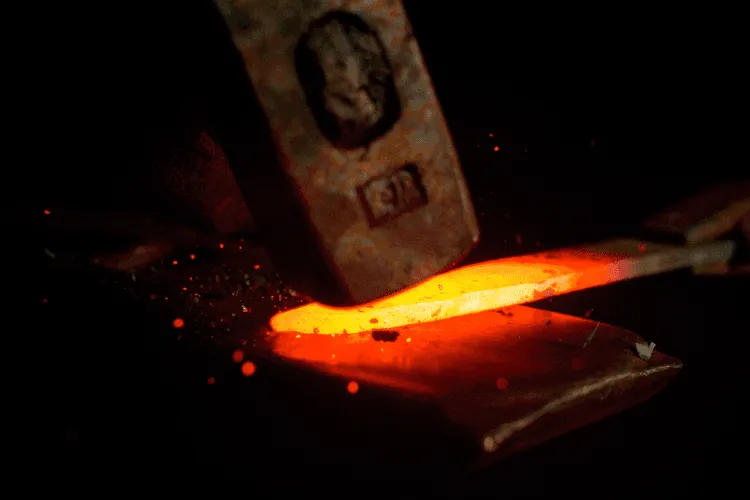
Army researchers have developed a 3D printing technique that produces steel 50% stronger than anything available commercially today. The steel is made using a method called powder bed fusionin which a printer’s laser melts a powder into a pattern and adds subsequent layers of powder to complete the required part. This technology could drastically reduce pieces of equipment soldiers have to carry around, allowing them to simply print replacement parts for tanks as necessary.
5. Fire-proof, water-based batteries
Fire-proof batteries will provide soldiers with a large power supply without the risk of batteries catching fire. Researchers have developed a non-flammable, water-based solvent battery to replace highly flammable lithium-ion batteries. These batteries use a lithium salt that can be stored and operated in varying temperatures. The batteries can be designed in different shapes and sizes and could be adapted in the future for use in electric military vehicles.
6. Hydrogen extraction for on-demand power
The Army has obtained an exclusive license to develop technology that generates on-demand hydrogen power using an aluminum tablet and any water-based liquid, such as urine. Researchers discovered the aluminum-based nanogalvanic alloy powder in 2017 and it could eventually be used to power up soldiers’ lights and radios when they are in remote locations and out of battery power. The technology is environmentally friendly, easy to transport, and easily scalable.
7. Using AI to identify fuel-efficient materials
Army researchers have developed a system of algorithmic bots called CRYSTAL that can examine endless combinations and elements to identify new fuel-efficient materials. The bots, among other things, could help in the development of improved fuel cells that provide better battery power on the battlefield, save lives, and enhance soldiers’ performance.
8. Robotic arrays for directional communication
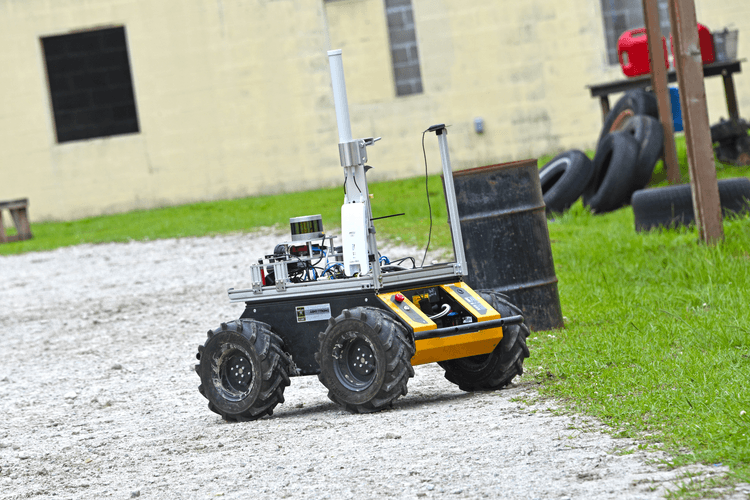
The Army is continuously working to improve communication capabilities in challenging environments. A new approach is the use of military robots that can deliver reliable, wireless communication. The ground-based robots, which utilize low-frequency antennas and AI to send directional radio signals, will enable high-quality communication at range and allow for covert behavior.
9. Biorecognition receptors for monitoring soldiers’ real-time health in the field
The Army is developing biorecognition receptors that can monitor soldiers’ health and performance in real-time. These wearable and robust peptide-based biosensors will capture data from sources including blood, sweat, and saliva and could eventually be used to assess environmental biothreats and health diagnostics.
10. Human interest detector for better reaction times
A human interest detector can pinpoint where a soldier is looking, monitor brainwaves, and decode the brain’s activity. This technology will allow analysts to track neural responses and identify what factors and scenarios capture a soldier’s attention, helping them to improve their situational awareness on the battlefield.