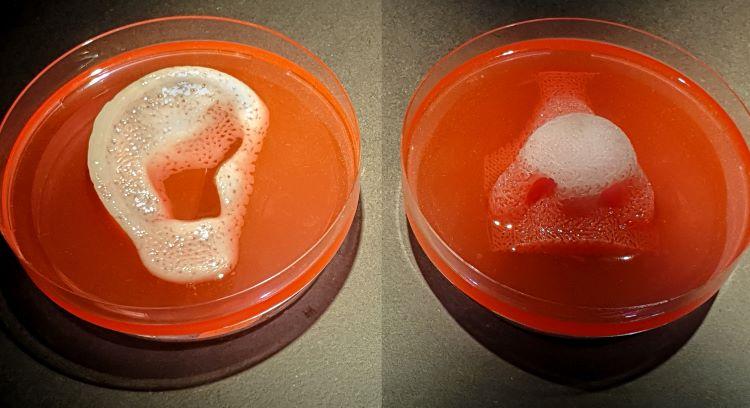
Bioprinting, alternately known as 3D biofabrication, is an innovative tissue-engineering technique that’s reshaping the field of regenerative medicine. This printed tissue-construction procedure allows medical professionals to 3D-print parts that imitate those found in the human body.
In essence, 3D fabrication combines 3D printing and biology. Through bioprinting, researchers and scientists can combine growth factors, biomaterials, and cells to fabricate biomedical components. The products of bioprinting are organ-like structures composed of living cells. Once printed, these cells can multiply and sustain the organ.
Scientists hope that bioprinting will eventually eliminate the need for organ donors, as they’ll be able to produce 100% compatible organ replacements on demand.
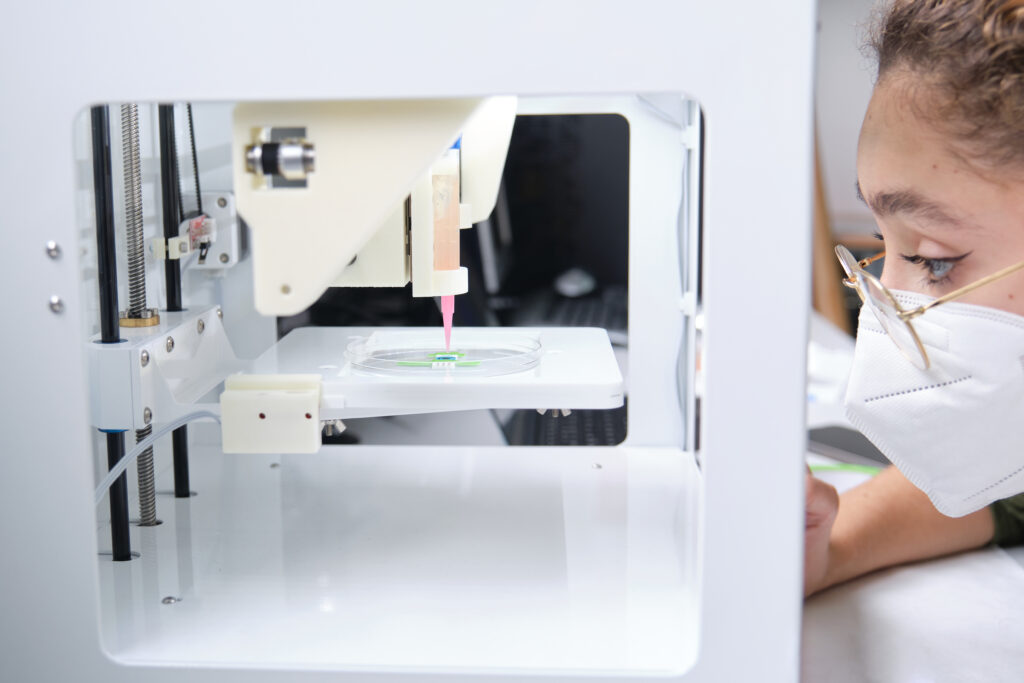
Image courtesy of Ladanifer / Shutterstock.com
How Bioprinting Works
Extrusion-based bioprinting is the most commonly usedbioprintingtechnique. With this method, scientists start by creating a digital file, which the 3D printer will “read.” These files are typically MRI or CT scans.
Next, the researchers will mix bioink, a solution that includes living cells and other organic materials, using a live-cell imaging system to ensure that the bioink is composed to maximize cell viability. Then, the 3D printer will extrude the bioink onto a scaffold, which is a natural or artificial material that supports the growth of new tissues.
Finally, the 3D printer will build the organ layer by layer using multiple printer heads until it has rendered a viable organ structure.
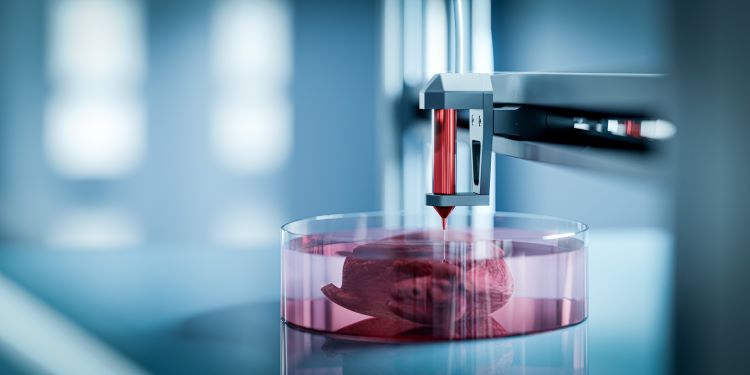
Image courtesy of guteksk7 / Shutterstock.com
Bioprinting Techniques
In addition to the procedure described above, scientists employ a variety of other bioprinting techniques, including the following:
Extrusion techniques are the most common and effective. However, the laser-assisted method provides the greatest precision.
Materials Used in Bioprinting
Bioprinting organs requires the use of several innovative materials, including hydrogels, bioinks, natural polymers, and synthetic polymers.
Hydrogels can withstand high shear stress and have many similarities to animal tissues, making them a foundational part of the bioprinting process. Similarly, bioinks contain cells, growth materials, and other organic components.
Synthetic and natural polymers are often used to form scaffolding. Alternatively, researchers can use decellularized scaffolds. The latter are made from decellularized organs, meaning the cells have been removed but the underlying structure remains intact. After the organs are decellularized, researchers can add bioink and hydrogels layer by layer to form a new, functional organ.
Advantages of Working with Printed Tissue
Bioprinting allows researchers to create complex organic structures with unparalleled precision. They can use endothelial cells to support tissue regeneration, create blood vessels, and layer printed tissue into living organ-like structures.
Along with facilitating the customization of tissues and organs, bioprinting could pave the way for reduced animal testing. Scientists can test the effects of drugs and medications on 3D-printed organs instead of using animal test subjects, leading to faster drug development.
Challenges and Limitations of Working with Living Cells
Researchers must navigate several legal hurdles, technological limitations, and ethical concerns to bring bioprinting into the mainstream.
From an ethical perspective,many have reservationsabout using human stem cells — or any cells that are living, for that matter — to create new organs and soft tissue. Even if researchers can overcome this dilemma, they’ll still face a lengthy and stringent regulatory approval process.
Furthermore, researchers must expand our understanding of cell biology. There are around 200 different cell types in the human body and tens of thousands in the surrounding world. Determining which combination of cells will create the most suitable biomaterials is therefore extremely difficult. Once researchers have developed suitable bioinks, they must achieve vascularized tissues.
While the field of bioprinting is evolving at an astounding rate, researchers have their work cut out for them if they want to achieve meaningful scalability and make a far-reaching impact on regenerative medicine.
Applications of Bioprinting for the Human Body
There are several exciting applications of bioprinting technology, including:
3D bioprinting can also pave the way forpersonalized medicine, meaning providers can create artificial organs and living tissues using patients’ own biomaterial.
Image courtesy of Vshivkova / Shutterstock.com
The bioethics community has been watching the field of bioprinting closely over the last several years. Some ethical concerns associated with bioprinting include tissue-engineering guidelines and where biomaterials are being sourced (i.e., fetal stem cells).
If bioprinting researchers receive FDA approval for clinical trials, it’s critical that they adhere to stringent tissue-engineering standards. Otherwise, they’ll struggle to obtain final approval and may inadvertently compromise patient safety.
That said, the research group that manages to successfully navigate both ethical and regulatory concerns will be in a position to revolutionize regenerative medicine.
Research partnerships and academia-industry collaboration have fueled the growth of the bioprinting market. When prestigious universities and industry leaders pool their resources, talents, and expertise, world-changing medical innovation is within reach. These partnerships will play a valuable role in the continued development of the bioprinting market.
Future Trends and Developments
Ongoing biofabrication research will undoubtedly lead to advancements in bioprinters and the development of new techniques. At the top of the list are multi-material and vascular bioprinting.
Multi-material bioprinting technology will allow researchers to print organic objects using several materials simultaneously, yielding functional multicellular constructs. Vascular bioprinting, meanwhile, will produce vascularized objects, such as bioprinted organs that can be integrated into a person’s circulatory and respiratory systems.
Advanced printers and other medical devices will play a critical role in the development and refinement of these printing techniques. Without them, bioprinting organs would remain out of reach.