According to a report recently published in Journal of the American Medical Association (JAMA), drones carrying a defibrillator could dramatically improve cardiac arrest survival rates. Cardiac arrest is the leading cause of death on the planet and, according to the American Heart Association, 90 percent of cardiac arrests are fatal.
The primary reason for this high fatality rate is because they usually occur outside of a hospital or medical facility. By the time an ambulance or first responder arrives, it’s simply too late. This is what led researchers at Sweden’s Karolinska Institute to investigate how a drone equipped with a defibrillator could provide more immediate assistance.
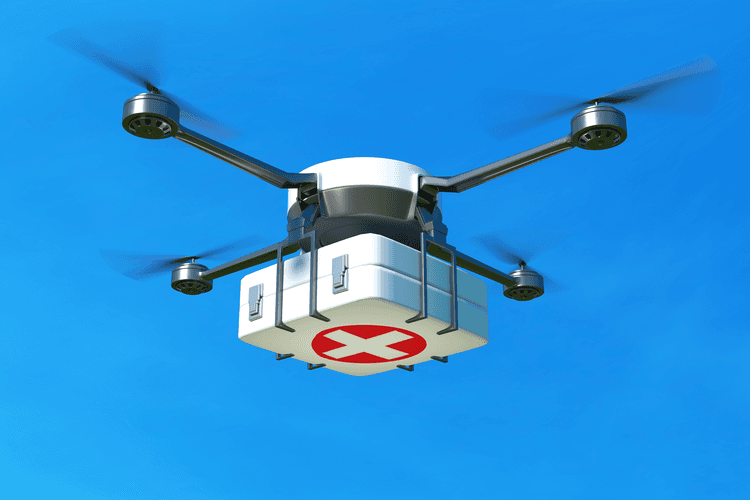
The team developed a 12.5-pound, eight-rotor drone carrying a 1.6-pound defibrillator that was released and piloted from a fire station north of Stockholm. The drone had a maximum cruising speed of just under 50 mph, and the defibrillator was equipment with an electronic voice that provided usage instructions.
Not to be confused with a heart attack, which occurs when a blockage stops blood flow to the heart, cardiac arrest is the result of a malfunction of the electrical impulse that controls the heart's pumping action. The heartbeat becomes very irregular or stops, preventing blood from reaching vital organs. Death can occur within minutes without CPR or use of a defibrillator.
After 18 flights, the defibrillator-packing drone was able to arrive on sight about 5.5 minutes after launch. It took an ambulance an average of 22 minutes to cover the same distance. Part of this time savings came from an ability to dispatch the drone less than five seconds after receiving the call. It took emergency services personnel about three minutes to get on the road.
Elements such as weather and response times over longer distances still need additional study. However, the Karolinska team feels their defibrillator drone program could be ready for implementation by 2019.