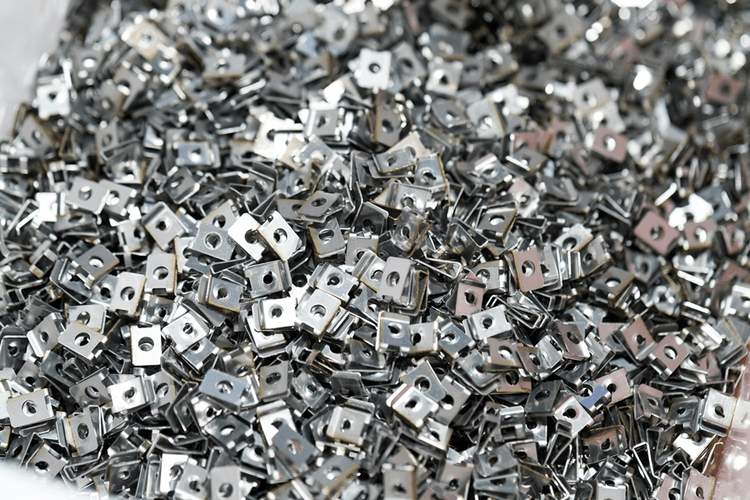
Photochemical machining is a manufacturing process that fabricates metal parts through precision photolithography and chemistry. It operates by corrosively machining away selected areas from custom-designed photoresisting stencils.
Manufacturers use photochemical machining because of its broad range of practical and aesthetic benefits. Today, photochemical machining’s versatile and cost-effective assets include:
- Low cost
- Quick turnarounds on tooling
- Rapid prototyping
- Quick part order delivery
- Thin gauged metals and foils
- Clean, precise, and unstressed parts
- Distinctive physical features
- Distinctive surface textures
- Identification features
- Uniform consistency
- Ease of product integration
Although modern versions of photochemical machining have been in use since the 1960s, this process is only the latest iteration of a practice spanning millennia. In this post, we track the evolution of photochemical machining from its birth in 2500 B.C. as a jewelry maker for Egyptian nobility to its wide range of uses today.
Using Acid Etching for the Pharoah’s Jewelry
Ancient Egyptians used linseed oil as a resist and vinegar as an etchant to make jewelry from copper. Later jewelry makers adapted alternative resists like waxes and plant-based resins to improve the precision of their engraving.
Following the ancient period, artisans developed organic, lactic, and citric acid etchants to decay lead, and by the First Century CE, alkaline etchants were introduced to better capitalize on the discovery of aluminum as an effective photoresist.
Methods and Usage Through the Renaissance
In the mid-1500s, photo etching relied on erosive chemicals or substance-heavy compounds like sodium, vinegar, and charcoal to decorate metal objects including armor, furniture, and weaponry. High-ranking soldiers and members of the nobility prized photochemical etching’s ability to create intricate patterns on their armor and weapons that conveyed social status without compromising the quality of the metal itself.
By the late 1600s, photo etching had spread to all corners of Europe. Artisans perfected a technique that involved using beeswax and other acid-resistant compounds to create photonegatives of their desired designs on chosen pieces of metal and then dipping these metals into acidic compounds. The acid then ate away at the noncoated portions of the metal, creating lasting designs that can still be viewed today.
Photochemical Etching During the Enlightenment
More than a full century before the Industrial Revolution, chemical etching became the go-to method for industrial applications. By the mid-1700s, photo etching was used to create uniform markings and points across working tools and instruments.
It was during this time that etchings expanded outside of a decorative realm and became a working technology. Precursors to modern-day manufacturing firms used photochemical etching to mass-produce patterned metal products like stamps and printing presses.
The Development of Photography During the Industrial Revolution
In 1826, Joseph Nicephore Niepce used a combination of silver chloride, bitumen, lavender oil, and pewter to create the first photograph. Soon after that, newspapers and periodicals were using photochemical etching to make printing plates. This was the only method fast and consistent enough to keep pace with the news industry’s time-sensitive demands.
Modern Photochemical Machining and Photo Etching
The real kickoff to photochemical machining as we know it today came with the creation of photoresists promoted by Kodak in the 1950s. As chemicals became more complex, manufacturers began using stronger metals, in turn diversifying photochemical machining’s uses. By the mid-1960s, photochemical machining was used for a diverse range of purposes, but it was still little known outside of the specific industries that adopted it.
In 2000, Cranfield University set up five research consortia comprising over a dozen rival commercial manufacturers across the globe. The consortia sought to develop new uses for photochemical machining to meet common manufacturing challenges, generating dozens of studies applying photochemical machining to new processes.
According to one study, this explosion of researched helped transform photochemical machining from a little-known process used in a small number of industrial companies to a $6 billion industrial practice. Because of its relatively low cost and ease of implementation, photochemical machining has greatly reduced production times and costs for manufacturers that adopted it.
Photochemical machining has since appeared in a broad array of industries, creating products including:
- Computers
- Medical instruments
- Semiconductors
- Motors
- Fuel cells
- Microwaves
- Washers
Photochemical machining now impacts a broad variety of precision metal part production processes. Its ability to create intricate designs without compromising system integrity renders it an essential solution for a number of practical and aesthetic considerations.
Resources:
- What is Photochemical Machining?
- Trends in the Development of Machinery & Associated Technology
- Acid Etched Metal in Renaissance & Early Europe
- Photo Chemical Machining History
Image credit: Aumm graphixphoto / Shutterstock.com