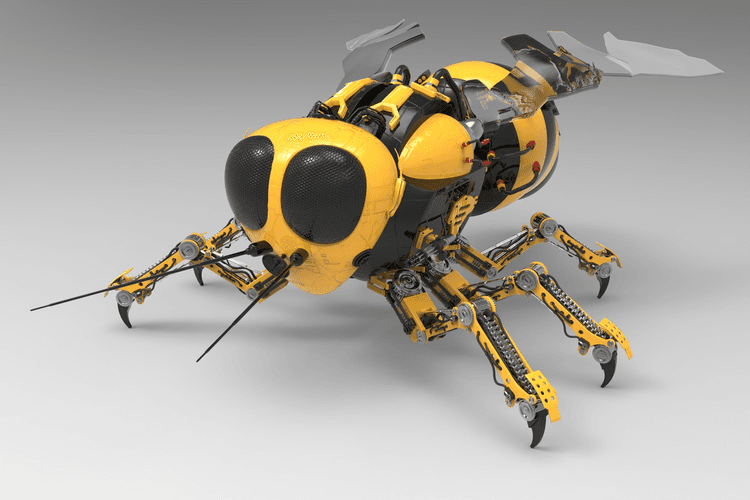
Not content with developing robots that simply look like an insect, Cornell University engineers have been working to develop a new type of programming that could help these robots react like an insect with a brain. So instead of wirelessly navigating them, the robots could autonomously respond to environmental changes like an actual fly on the wall.
While autonomous robotic behaviors are not new, this level of functionality requires significant computing power. This type of power usually comes from a device much larger than a fly- which is where the development of neuromorphic computer chips could be a game-changer.
Unlike traditional chips that process binary code, neuromorphic chips process spikes of electrical current. These spikes flow in ways that are similar to how neurons fire in the brain. Moreover, because these types of chips require less power than traditional processing equipment, they consume less space and can be fitted to robots the size of insects.
The task of Cornell researchers, led by Silvia Ferrari, is to develop algorithms that can be fed into a network of sensors. The sensors will then respond accordingly by mimicking neural activity. An example would include adjusting wing movements based on a gust of wind.
The group’s first attempt is an 80-milligram flying RoboBee outfitted with vision, optical flow and motion sensors. The data gathered by these sensors should help in obtaining data for developing algorithms that could help the RoboBee avoid crashes or moving objects. Additional microdevices are also being developed that include a camera, expanded antennae for tactile feedback, contact sensors on the robot's feet, and airflow sensors that resemble tiny hairs.