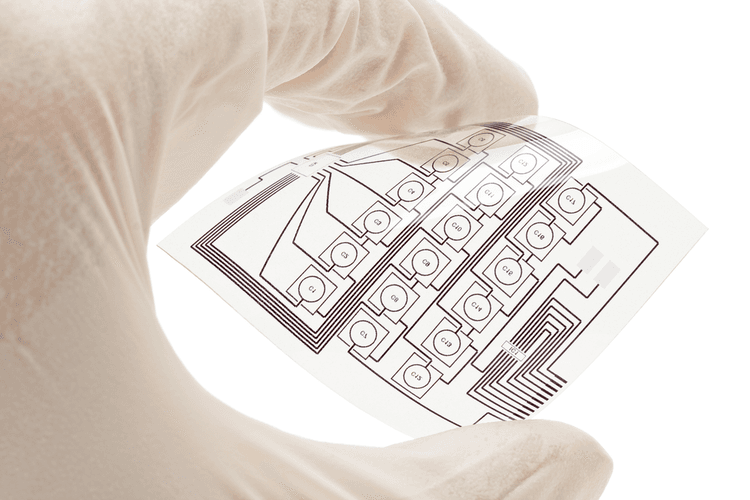
A team at the Computer Science and Artificial Intelligence Laboratory (CSAIL) at MIT was recently able to create a 3D-printed part that can fold up on itself – allowing for a greater number of applications in delicate electronic environments. A key component in the development of this technology was the accidental discovery of new material for printing.
Printable electronics are nothing new, but to expand the use of these components, researchers have been trying to find materials that are less susceptible to heat and water. They were also looking to find ways in which they can create precise angles when folding these printed pieces to ensure optimum compatibility.
The new material was inadvertently discovered while CSAIL researchers were trying to develop ink that yielded greater material flexibility. What they ended up finding was a material that let them build joints that would expand enough to fold a printed device in half when exposed to ultraviolet light.
The new printing material or ink expands after it solidifies, whereas most comparable materials contract. Thisunusual property allows for the part to form joints or creases for changing its shape after it has been created.
Thismaterial discovery offers opportunities in both the near and longerterm. First, this ability to construct 3D-printable electronics with foldable shapes could expand the production of customized sensors, displays, and transmission devices. Over the longer term, more complex electronics could become a reality, including electromechanical and power-assisted components, as well as end-products for industrial automation.