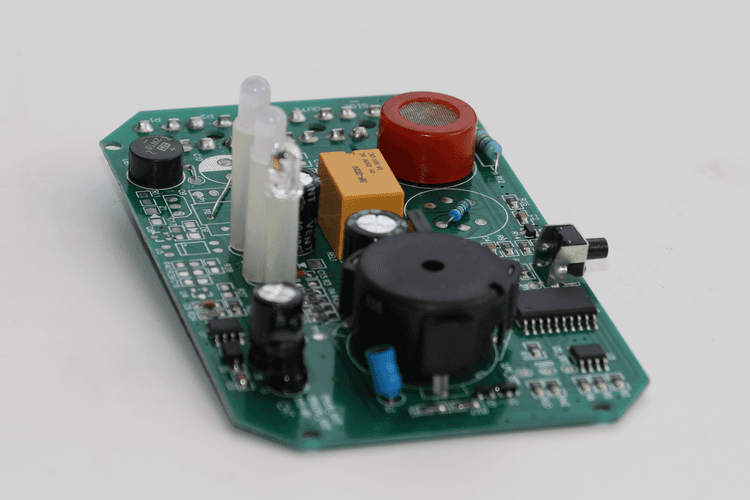
While detecting explosive gases and ensuring clearer radar transmissions sounds like Mission: Impossible technology, those are the functions of recently developed sensors. The ability of these devices to provide clearer, more accurate data will be critical in developing future safety and air defense systems.
A recently developed laser-based spectroscopic process helps identify explosives and other dangerous substances more rapidly by combining two unique approaches. The first technique bounces short laser pulses through a mixture of gases to measure the wavelengths of individual gas molecules. A second method uses frequency combs to produce a spectrum of frequency lines which can then be used tomeasure the optical frequencies unique to specific molecules inthe gas mixture.
When used together, these processes produce data that can identify substances that were not previously detected or identified. While each method can identify a single gas, a more sophisticated approach was needed to analyze mixtures. By combining these techniques, sensors can obtain multiple data points and streamline the time it takes to identify these substances accurately.
Similarly, the U.S. Defense Advanced Research Projects Agency (DARPA) recently announced the creation of a sensor capable of capturing real-time video despite the presence of cloud cover. Part of its Video Synthetic Aperture Radar, or ViSAR, program, DARPA feels this could be a breakthrough in improving ground targeting systems when flying through or above clouds.
At the heart of the ViSAR program, which was commenced in 2013, is the development of a high-frequency sensor that can operate in clear weather as effectively as electro-optical and infrared sensors that are more complicated to use and more susceptible to being picked up by other radar systems. While radar systems capable of working through clouds do exist, none of these had been compatible with current aircraft or capable of maintaining frame rates fast enough to track moving ground targets.