
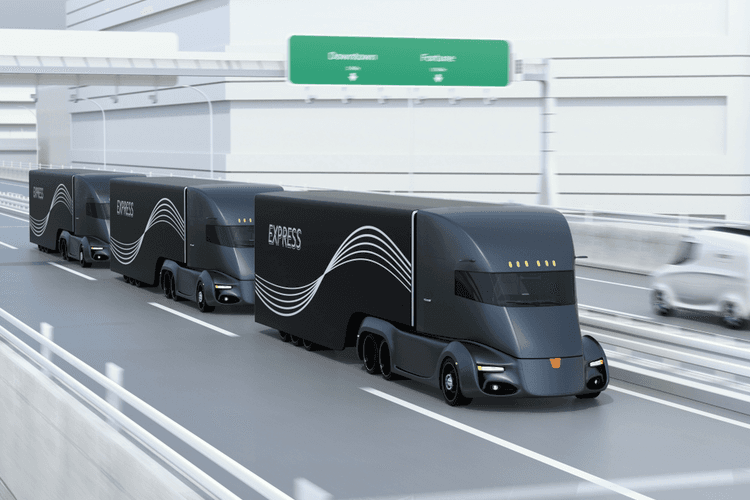
This week marks the seventh annual National Drive Electric Week, a weeklong event in which professionals, novices, and enthusiasts across the country celebrate and promote awareness of electric and hybrid vehicles. In recognition of this year’s National Drive Electric Week, we'll be exploring the progress being made in the commercial transport sector.
For many, the invention of the automobile represents the epitome of modern technological advancement. Like the printing press, both personal automobiles and commercial vehicles have irreversibly changed the fabric of society, ushering in an era of major growth and change.
Today, we are more reliant than ever on commercial fleets. From food to clothes to medicine, virtually everything we need for sustaining life is delivered by a truck at some point in the supply chain journey. And because of the vital role it plays in our everyday lives, the trucking industry has also become a major artery in the United States’ economic anatomy.
Unfortunately, these fleets also cause the vast majority of carbon dioxide emissions in the United States, and pose a significant risk to the environment. According to the United States Environmental Agency (EPA), 28.5% of the country’s greenhouse gas emissions are produced by the transportation industry.
Despite reductions of 80% in overall energy-related CO2 emissions over the past decade, an analytical report published earlier this year by Rhodium Group, an independent research firm, indicated that the commercial transportation sector had hardly reduced their carbon footprint at all.
However, there has been a global effort from organizations and corporations alike to develop electric and hybrid commercial fleet solutions that, instead of hurting the economy, will provide the leverage necessary to launch us into a new era of prosperity.
The Economic Case for Electric Commercial Transport
The European Climate Foundation (ECF), an organization dedicated to promoting environmentally conscientious energy policies, and Cambridge Econometrics, a data-driven economy think tank, recently teamed up to compile a comprehensive report that analyzed the socioeconomic impact of electric commercial trucking in Europe.
According to their findings, by transitioning the European Union’s truck fleet from traditional diesel-powered models to electric and hydrogen vehicles, up to 11 billion barrels of oil will be eliminated from the EU’s transportation sector by 2050. The ECF stipulates that reducing the amount of oil used in commercial trucking will bring about financial benefits in two ways:
- Approximately 89% of Europe’s oil is imported, which results in high fees being paid to petroleum suppliers. On their website, the ECF points out that “for each €100 spent on fueling the average vehicle, €43 leaves the European economy.” By reducing the dependency on imported oil, Europe would be able to restore that capital back into the European economy.
- Smoothly managing the transition to electric and hybrid vehicles will require a number of people working together, specifically professionals in the manufacturing and construction sectors. The ECF believes that approximately 800,000 jobs can be generated during this process. It’s also likely that younger workers will be attracted to the commercial transport sector once it becomes more eco-friendly.
The Challenges of Achieving a Fully Electric Fleet
While the economic benefits are an exciting prospect, there are some looming challenges that need to be grappled with — most notably, the staggering upfront costs associated with setting up a zero-emission commercial truck fleet.
Achieving this goal would require a complete overhaul of the current energy infrastructure — an exorbitantly expensive process. The above-mentioned report acknowledges that implementing the project will probably cost up to €140 billion ($162 billion). For America to convert their commercial fleets, the cost would likely be similar.
There are also some logistical kinks that have yet to be solved, such as the fact that trucks require a lot more power than smaller electric vehicles, and would require areas to recharge frequently during long hauls. Plus, the batteries required to power a large truck would be extremely heavy, adding a significant amount of weight to a truck’s cargo.
The Slow Process of Implementation
Most proponents of electric commercial trucking recognize the challenges they face, and realize that accomplishing such a huge goal will not happen overnight. The ECF’s plan to revolutionize Europe’s commercial fleets, for example, is intended to be carried out over the next few decades, with the aim of being fully manifested by 2050.
There are also a number of corporations contributing their own funding and research toward accomplishing this goal. In 2017, Tesla unveiled a Class 8 semi-truck that can carry 80,000 lb for about 500 miles before needing to refuel. According to CEO Elon Musk, the semi-truck will ultimately be cheaper to operate per mile than a standard diesel model.
Package delivery giant UPS, which has also collaborated with a number of startups across the globe to develop a diverse range of electric delivery vehicles, reportedly preordered 125 of Tesla’s electric semi-trucks, and many other companies have expressed interest.
While we may be several decades away from having the highways dominated by electric commercial fleets, it’s safe to say that the future of commercial transport will be electric.
Resources:
- Electric Delivery Trucks Carry a Host of Benefits, Silence and Savings Among Them
- National Drive Electric Week
- Electric Trucks Facing Long Road to Unseat Diesel Engines – Bloomberg
- Electric Trucks Could Save Europe 11 Billion Barrels of Oil – Bloomberg
- Cars and trucks are America's biggest climate problem for the 2nd year in a row – Vox
Image Credit: Chesky/Shutterstock.com