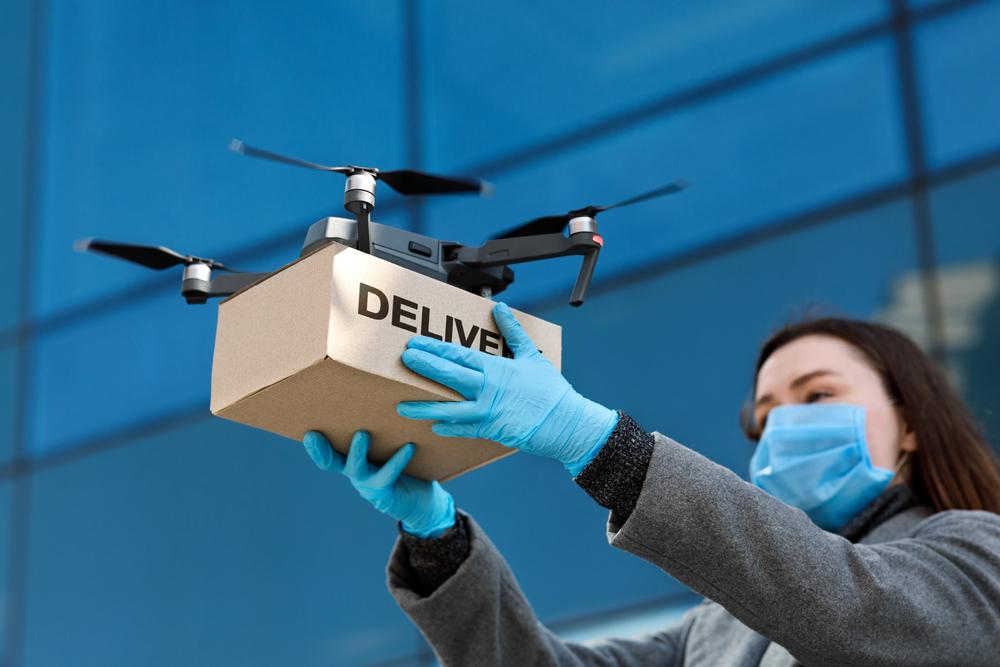
In 2013,Jeff Bezos, founder of Amazon, predictedthat delivery drones would fill the skies by 2015. It took a few more years, but 2024 could be the breakout year for drone deliveries.
In fact, recent FAA approvals have set up multiple companies, including those partnering with Amazon and Walmart, to expand operations. Below are the top last-mile delivery drone manufacturers in 2024.
Top Delivery Drone Manufacturers
Flytrex deploysaviation-grade certified dronesfor autonomous backyard delivery across American suburbs. This service is currently available in certain neighborhoods in Texas and North Carolina.
Created to establish “frictionless” delivery,Matternet’smedical logistics delivers medicine via the new M2 drone, focused primarily on inaccessible areas.
Zipline, founded in Rwanda in 2016, operates in eight countries. It has flown more than 64 million miles to deliver nearly 10 million items inAfrica, Asia, and North America, serving over 4,000 medical centers.
Zipline offers instant logistics seven times faster than traditional automobile deliveries with97% fewer emissions. Scalable services help companies deliver commercial goods, food, medical supplies, and more.
As of September 2023,the FAA authorized UPS Flight Forwardand its fleet for BVLOS operations.
uAvionix is anavionic solutions firmthat has also received authorization to test its BVLOS detection and avoidance systems.
Amazon’s Prime Air has been making limited deliveries intwo small U.S. markets: Lockeford, California, and College Station, Texas.
The drones weigh 80 pounds and zoom at freeway speeds of 60 mph to deliver within the hour (or faster) for same-day shipping.
Wing has tested lightweight drones across several continents and has completedmore than 350,000 commercial deliveries. The drones “plan their own routes” and self-correct errors. Wing is owned by Alphabet, Google’s parent company.
Phoenix Air Unmanned uses LiDAR and other imaging techniques to capture survey data foroil and gas companiesor toinspect power lines and pipelinesfrom an altitude of 400 feet.
Walmart has partnered with Zipline and Wing to bring drone deliveries to an additional1.8 million Texas householdsin the Dallas-Fort Worth area by the end of 2024.
Delivery Drone Applications
In early 2022, around 2,000 drone deliveries were occurring daily worldwide. In remote areas, drones may already be the most effective transport. And for small items, why commit atwo-ton vehicleto chauffeur a measly burrito, AA batteries, or tissues?
Similarly, drones could excel atlast-mile deliveries, such as those conveyed by Wing and its U.S. partners FedEx Express, Walgreens, and Walmart. The companies only have to package an item before being picked up and transported via drone.
Delivery Drone Regulations and FAA Approvals
Thebiggest regulatory hurdleis FAA approval for beyond visual line-of-sight (BVLOS) flight, in which the operator has no line-of-sight to the aircraft. BVLOS capabilities and approval are necessary toscale deliveries nationally, allowing companies to expand from serving a few thousand homes to serving hundreds of thousands.
Over the past several months, the FAA has approved BVLOS operations formultiple companies, including Wing, Zipline, Matternet, uAvionix, Phoenix Air Unmanned, and UPS Flight Forward. UPS can now deploy its fleet “without safety observers along the route,” using onlyground-based surveillance.
BVLOS can help solve a primary financial snag: labor accounts for 95% of the cost of drone delivery, given that one operator controls a single drone. To financially leapfrog other transport modes, the ratio may need to improve to20 drones per operator, according to a McKinsey & Company report.
Other essential regulations grant drones with IDs and coverFAA restrictionson drone takeoffs, landings, and regional operations.
Delivery Drone Statistics
According toMordor Intelligence, the global delivery drone market is estimated to reach $2.8 billion in 2024. By 2029, it will rise to $16 billion.
Eyeing Improvements: Advances in Delivery Drone Technology
Amazon projects that their latest Prime Air drone, theMK30, will deliver packages in three U.S. cities, Italy,and the U.K. by the end of 2024. This next-gen MK is safer, quieter, and more agile, tackling common delivery problems: small yards and crammed suburbs. It also has a better range and can handle light rain.
For safety, BVLOS-certified drones are allowed to use automatic surveillance-based detectionand avoidance systemsto discern and dodge local hazards liketrees, power lines, people, pets, and property.
Multi-layer redundancy boosts safety and performance ascloud platformsorganize orders, create efficient routes, and provide an overview of all operations.
The Benefits and Drawbacks of Delivery Drones
Drones offer many potential benefits, including:
However, delivery drones do have some drawbacks, including:
Delivering a More Convenient Future
Will drone deliveries become a sustainable, viable future service? Like autonomous vehicles and artificial intelligence-created art, the road ahead looks bright but unclear.