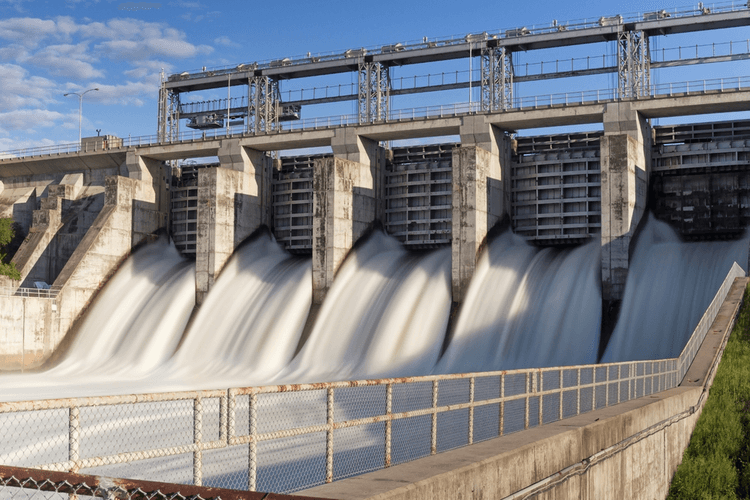
During low water conditions, wicket gates — adjustable dams traditionally made of wood and steel — can be raised and lowered to control water flow. When used to control flow to a water turbine, wicket gates permit more water to flow into the turbine when opened, enabling a higher output of power. Through controlling a wicket gate or gates, users may govern the levels of preferred energy output. On the waterways used by ships and barges, wicket gates are also frequently used to regulate water levels in locks to ensure the water is deep enough to allow the passage of ships.
Wicket gates constructed from fiber reinforced polymer (FRP) materials feature long service life and enhanced flow control, which may both drive significant life cycle cost savings. Aside from standard sizes, wicket gates can be custom-designed to fit within current boundaries so that they can adapt to nearly any requirements. Constructed to be lightweight, wicket gates are simple to operate with straightforward installations.
Water Control Gate Uses to Improve Waterway Travel
Water control gates are common in waterway systems, such as locks that control water levels in canals. Without gates to control water levels within locks, barges and ships would not be able to pass many waterways during seasons where water levels are too low for travel. Such locks are also used to balance levels between uneven bodies of water to allow the passage of marine vessels.
Those in control of gates may want to stop water flow for any number of reasons, such as allowing workers to perform maintenance on equipment or on the wicket gate itself. Often, the wicket gates are comprised of a hydraulic control system, carefully designed to withstand demanding water pressure, which permits automatic operation of the gates without manual interference.
Wicket Gate Uses in Hydroelectric Power and Locks
To determine the amount of power a hydroelectric dam can produce, wicket gates are used to manipulate the water flow as it approaches the generator. Essential to the dam’s functionality and performance, wicket gates vary in their design and size based upon the needs of the dam.
Depending on the power needs of the hydroelectric facility, plant managers closely monitor the wicket gates to control flow and scale energy production. To produce additional energy, the gates are opened wide. To limit the water flow and decrease the production of energy, the gates are closed.
Typically, a sequence of wicket gates will encircle the turbine of a hydroelectric plant. With the gates securely closed, no water will pass through the blades of the turbine. Once the wicket gates open, water flows, rotating the turbine’s blades and driving the operation of the generator. Large generators can power electricity to homes and businesses alike.
Benefits of FRP Wicket Gates
While wicket gates are built to last, they are still subject to corrosion, as is any wood or metal equipment that spends its service life in contact with water. Fiber-reinforced polymer (FRP) wicket gates are becoming more popular — especially in lock applications in which equipment failure from corrosions can cause delays that severely impact trade. FRP isn’t subject to the same corrosion risks as wood or steel gates, making it an ideal material for equipment that is constantly exposed to water the way wicket gates are.
Working With Wicket Gates
With green energy trends on the rise, some experts believe that hydroelectric power generation will double in the next 15 years, making it necessary to update existing turbines and generators. To do so, wicket gates and flood control dams can be employed to produce electricity. To control the water flow into a turbine and enable accurate manipulation of the levels of energy produced by a generator, wicket gates are an essential component in the continued development of sustainable energy.
The economic value of waterways is much greater than most people realize. As the United States continues to be plagued by infrastructure problems, waterways are typically neglected more than any other mode. Installing quality wicket gates and lock gates that will have a long service life will be crucial to maintaining an effective water transportation network in the years to come.
Resources:
- Wicket Gates
- Wicket Gates
- Hydro
- Wicket Gate Bearings
- Overcoming Problems with Sticking Wicket Gates
- Wicket Gate, Illinois River
Image Credit: Kat72/Shutterstock.com