What material will enable humanity to build warm, UV-proof settlements near the Martian icecaps? Which 2D materials that will be used to construct an elevator into space? Why could Silicon Valley one day be known as “Tin Valley”? What’s the new black gold?
Let’s explore the wonder materials of the future.
1. Silica Aerogel
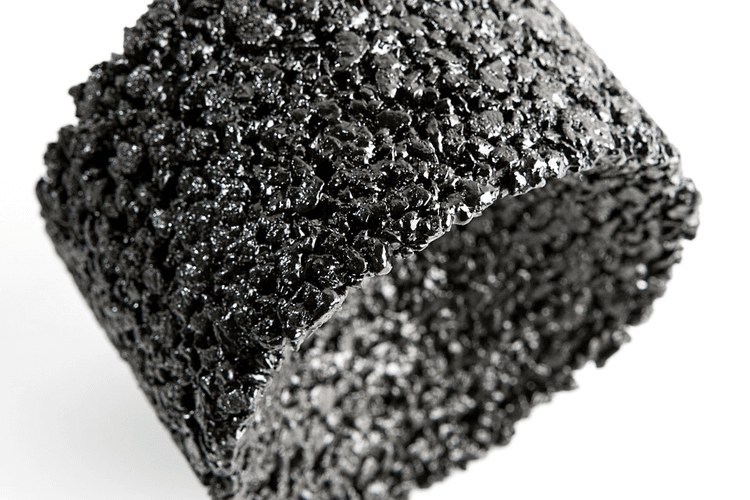
Described as “strange and ghostlike,” this material is actually a solid despite being 99.98% air. Made by sucking the liquid out of gel using a supercritical dryer, aerogel consists of air pockets which make it ultralight and capable of trapping heat. Mars enthusiasts believe silica aerogel could be used to build settlements (domes) near the red planet’s polar ice caps where they will trap heat, melt polar ice into usable water, and block harmful ultraviolet radiation while allowing visible light through. The material weighs almost nothing, which will make it easy to transport to Mars (although it is bulky).
2. Phosphorene Nanoribbons
The accidental discovery of phosphorene nanoribbons earlier this year has everyone working in the field of battery technology abuzz. Their corrugated structure means the charged ions in electric vehicles, aircraft, and solar batteries could move up to 1,000 times faster, leading to a decrease in charging time and a 50% increase in battery capacity. It could also mean a transition from hard-to-source lithium ions to abundant sodium ions.
The “wonder ribbons” are one atom thick and 100 atoms across, but up to 100,000 atoms in length. They are uniform but manipulable, meaning their properties (such as electrical conductivity) can be fine-tuned. Their flexibility means they can be twisted and can perfectly follow the contours of surfaces.
Other potential applications include:
- Smaller and faster electronic devices
- High-efficiency solar cells
- Wearable fabrics that convert waste heat into electricity
- Cheap hydrogen fuel production
3. Black Gold
Scientists from India’s Tata Institute of Fundamental Research have discovered “black gold.” In this case, the term doesn’t refer to oil or petroleum, but to a new material created by rearranging the size and gaps between gold nanoparticles. The new material can absorb carbon dioxide and the entire visible and near-infrared region of solar light.
Potential applications include:
- Artificial photosynthesis (capturing carbon dioxide and converting it into fuel)
- Solar energy harvesting
- Seawater desalination
4. Smart Composite Structures
London Bridge would never have fallen down if the Elizabethans had known about fiber-optic-based smart composite structures.
A game-changer in terms of building engineering and aircraft safety, this technology involves the embedding of fiber-optic sensors within advanced composite materials. Variously known as a fiber-optic structural integrity monitoring system and a fiber-optic damage assessment system, these sensors can measure and report on the internal strain or detect load-induced acoustic emission within composite structures. The most effective method to create sensor-embedded materials is to integrate a network of sensors within polyimide film as an “optical fiber sensor layer,” then embedding that layer into the composite material.
While sensors have been included in the construction of aircraft parts and buildings in the past, this has led to problems with stress concentration because they have not been “embedded” in the sense of being a part of the material itself.
5. Other 2D Materials: Graphene, Borophene, and Stanese
Graphene
Remember when you were in school and first learned that ants can lift up to 50 times their body weight? In the world of advanced materials, carbon-derived graphene outperforms even the strongest insect in terms of proportional strength.
With a surface mass of 0.763 mg per square meter, graphene’s density is only 5% that of steel, yet in proportion to its thickness, it is 100 to 200 times stronger than steel, making it a contender for the material that will eventually be used to build the much-vaunted space elevator. Other useful properties include very efficient conductivity of heat and electricity, near-transparency, and large, nonlinear diamagnetism.
Predicted applications for this material include:
- Solar cells
- Batteries
- Computer chips
- Water filters
- DNA sequencing
- Transistors
- Data storage
- Light-emitting diodes (LED)
- Touchscreens for smart devices including smartphones
- Use within composite materials (for aircraft and as a substitute for steel in construction)
Graphene usually takes the form of a powder or is dispersed in a polymer matrix, making it suitable for advanced composites, paints, lubricants, oils, 3D printer materials, capacitors, and batteries. In mid-2019, researchers from the University of Rochester and Netherlands’ Delft University of Technology announced a way to mass-produce graphene at scale using bacteria.
Borophene
For the next generation of advanced technologies such as EV batteries, quantum computers, smaller, stronger and more flexible materials are going to be required. That’s where borophene comes in.
Derived from the element boron, borophene is only an atom thick and is being hailed by scientists as twice as strong and more flexible than graphene. It is a superconductor and a good conductor of heat and electricity. Unlike graphene, however, researchers are struggling to produce borophene at scale. The material is also expensive and hard to handle.
Potential applications include:
- more powerful lithium-ion batteries
- hydrogen storage
- flexible electronics
- next-gen quantum computers, wearables, and biomolecule sensors.
Stanene
With the emergence of wonder-material stanine (otherwise known as 2D-Tin), it’s possible that Silicon Valley may one day be called Tin Valley instead.
Like graphene and borophene, stanene is composed of atoms arranged in a single hexagonal layer but is derived from tin rather than carbon or boron. It has been found to conduct electricity at 100% efficiency and is a topological insulator. With no heat generated to limit performance, stanene could revolutionize integrated circuits (microchips) to create faster, smaller, and more energy-efficient computers. Stanford researchers expect that stanine will be increasingly used in circuit structures and replace silicon in the hearts of transistors.